
TL;DR Quick Answers
commercial junk removal services
Commercial junk removal services clear bulky waste, furniture, and appliances from commercial and multi-family properties, then haul, recycle, or donate the load. For multi-family operators, the speed comes less from the hauling than from the timing: book the cleanout the moment a unit goes vacant, and the rest of the make-ready stops stalling behind it.
What they cover:
Furniture, mattresses, appliances, electronics, carpet, and general bulk trash pulled from vacated units
Common-area cleanups and dumpster-overflow service that protect curb appeal and head off code violations
Same-day, scheduled, or recurring pickups, often with volume pricing built for property managers
Recycling and donation of usable items so less of the load reaches the landfill
Top Takeaways
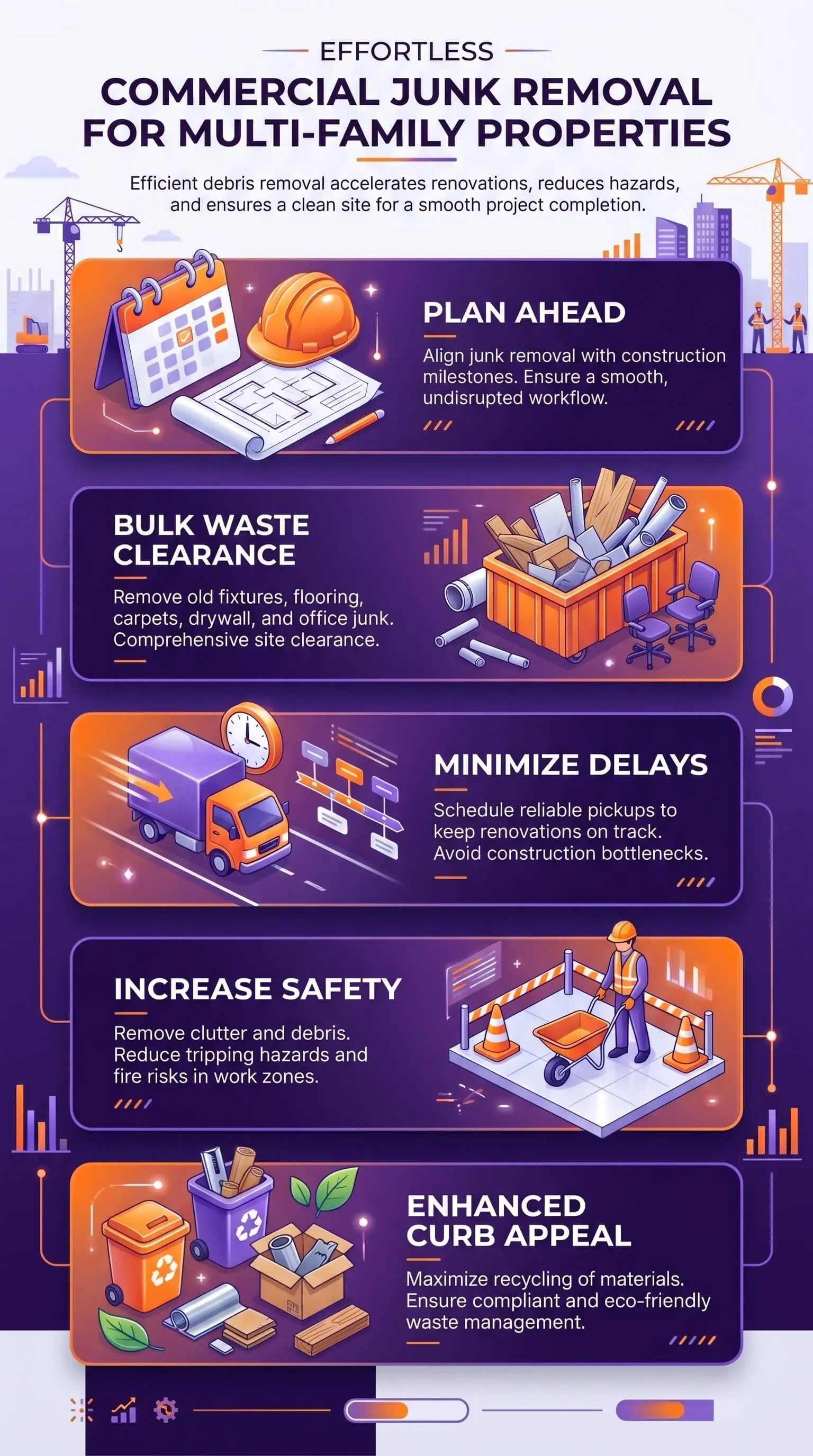
Commercial junk removal clears furniture, mattresses, appliances, electronics, and bulk trash from vacated units so they turn lease-ready fast.
Same-day and scheduled hauls keep turnover moving, and recurring programs handle the common-area and dumpster-overflow waste that builds up across busy properties.
Volume pricing and account terms keep costs predictable when you turn many units a year.
A provider that recycles and donates keeps usable items out of landfill and supports your sustainability goals.
Vet for licensing, insurance, upfront quotes, and multi-location support before you sign on.
What the Service Covers and Why It Matters
Commercial junk removal for multi-family properties handles the heavy, awkward items that pile up during turnover and daily operations. That means sofas, mattresses, dressers, refrigerators and other appliances, televisions and electronics, carpet and padding, shelving, and the general bulk trash left behind after a move-out. A good crew clears the unit, hauls the load, and leaves the space broom-clean so your make-ready team can step in.
Turnover, Common Areas, and Overflow
The work splits into a few buckets. Unit-level cleanouts reset a vacated apartment. Common-area and dumpster-overflow service keeps shared spaces clear when residents stack furniture beside the bin, which protects curb appeal and helps you avoid code violations. Recurring pickups, valet trash programs, and HVAC system disposal support handle the steady flow that builds up across a busy property without a phone call every week.
What Drives the Cost
Pricing tracks a few simple factors: the volume and weight of the load, the item type (appliances and mattresses often carry disposal fees), and access. A third-floor walk-up with a long carry costs more than a ground-floor unit beside the dumpster. Most providers built for property managers offer volume pricing and account terms, which keeps spend predictable when you turn dozens of units a year. Always ask for an upfront quote before a crew shows up.
When you vet professional junk removal services, check the basics. Look for licensing and insurance, a certificate of insurance on file, transparent quotes, recurring scheduling, and a documented recycling and donation process. Multi-location account support matters if you manage more than one building.
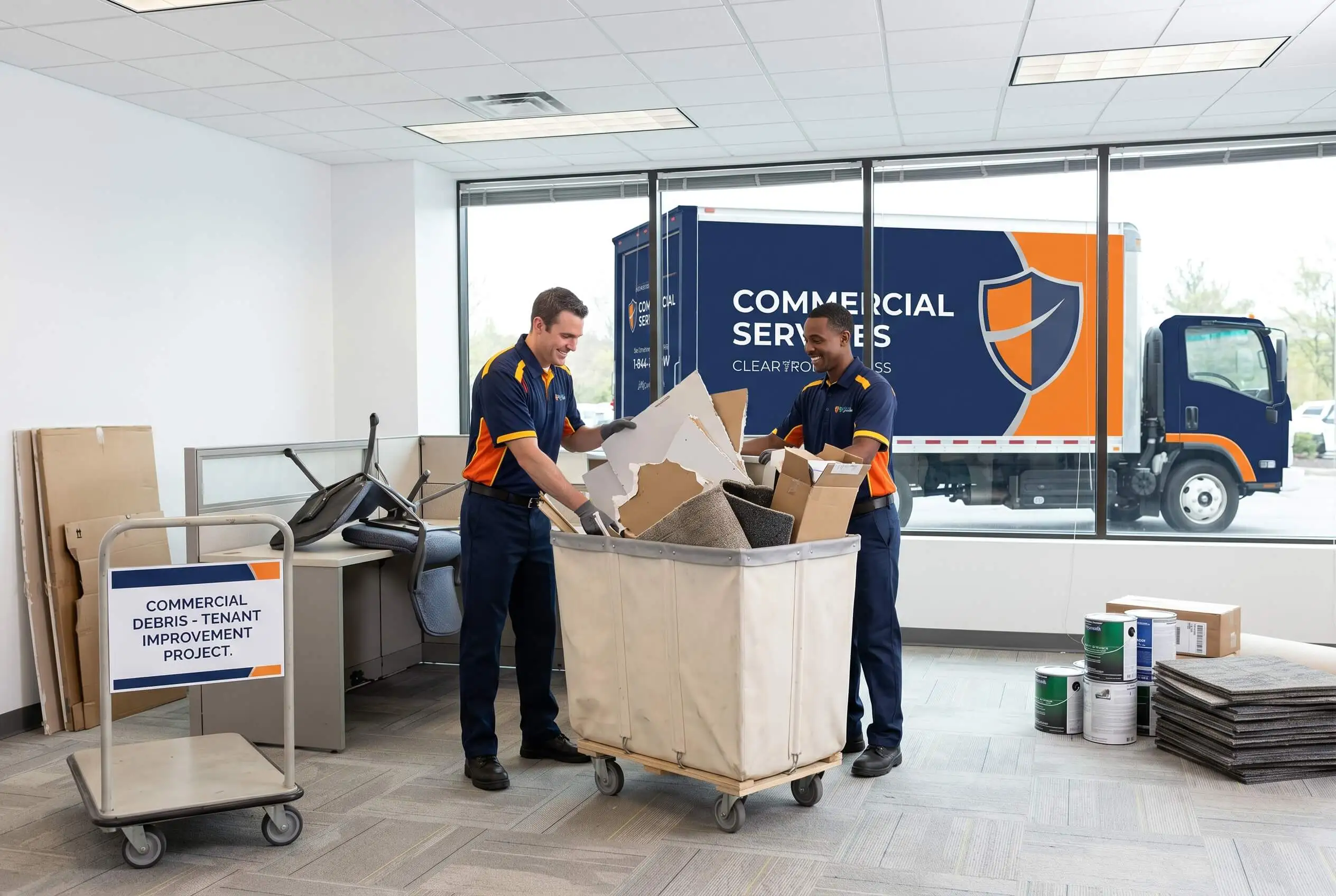
"On a 200-unit property, the cleanout is the hidden bottleneck. I’ve watched a make-ready stall for three days because nobody scheduled the haul-out first. Once we started booking junk removal the same morning a notice-to-vacate came in, our average turn time dropped by almost two days. The crews that win our recurring work are the ones that show up on time, recycle what they can, and hand us a clean unit we can paint that afternoon."
Essential Resources
Reducing and Reusing Basics (U.S. EPA): guidance on donating and reusing furniture and goods before they hit the landfill.
Habitat for Humanity ReStore: Donate Goods: furniture and appliance donation, with pickup at many locations, that keeps usable items in circulation.
Earth911 Recycling Center Search: find local recycling and drop-off options for bulky items by ZIP code.
Furniture Waste: A Growing Issue (Recycle Track Systems): background on why furniture is so hard to dispose of and divert.
Six Ways to Reduce Resident Turnover Time and Costs (Multi-Housing News): an operations playbook for faster, cheaper turns.
Municipal Solid Waste Factsheet (University of Michigan Center for Sustainable Systems): the data behind what Americans throw away.
How to Book Junk Removal for a Condo: a practical walkthrough for scheduling a multi-unit cleanout.
Supporting Statistics
Americans generated 12.1 million tons of furniture and furnishings at end-of-life in 2018, about 4.1 percent of all municipal solid waste, according to the U.S. EPA.
The National Apartment Association puts average turnover cost near $1,800 per unit, which makes a fast, clean haul-out a direct line to protecting your bottom line.
Roughly half of U.S. municipal solid waste, about 146 million tons in 2018, still goes to landfill, EPA data shows, which is why a provider that recycles and donates matters.
Final Thoughts
Turnover is where multi-family margins quietly leak. The repairs and paint get all the attention, but the cleanout is what gates everything else, and it’s the easiest piece to systematize. Build a residential junk removal service into your move-out workflow instead of treating it as an afterthought, and the rest of the turn moves faster. My take: the operators who run the tightest properties don’t chase the cheapest haul. They pick a residential junk removal service they can schedule on repeat, one who shows up, recycles what’s usable, and hands back a lease-ready unit. That reliability is worth more than a few dollars saved per load.
Frequently Asked Questions
What items can a crew remove from a vacated unit?
Most crews take furniture, mattresses, appliances, electronics, carpet, and general bulk trash. Hazardous materials like paint, chemicals, and some batteries usually need separate handling, so confirm what’s accepted when you book.
How fast can a turnover cleanout be scheduled?
Many commercial providers offer same-day or next-day service, with scheduled and recurring options for portfolios. Booking the haul as soon as you get a notice-to-vacate keeps the rest of the make-ready on track.
How is pricing calculated for multi-unit jobs?
Cost depends on volume, weight, item type, and access. Providers that work with property managers typically offer volume pricing and account billing, so ask for an upfront quote and recurring rates.
Do providers recycle or donate usable items?
Reputable companies sort loads to recycle metal, wood, and electronics, and they donate usable furniture and appliances before sending anything to landfill. Ask for their diversion process if sustainability reporting matters to you.
Can one account cover multiple properties?
Yes. National and regional providers built for commercial work can manage several locations under one account, with consolidated scheduling and billing.
Make Your Next Turnover Easier
Stop letting old furniture and dead appliances hold up your make-ready. Get an upfront quote from licensed junk removal services, lock in recurring pickups for your portfolio, and clear each unit before the next lease starts. Faster turns, cleaner common areas, and one less thing on your plate.