
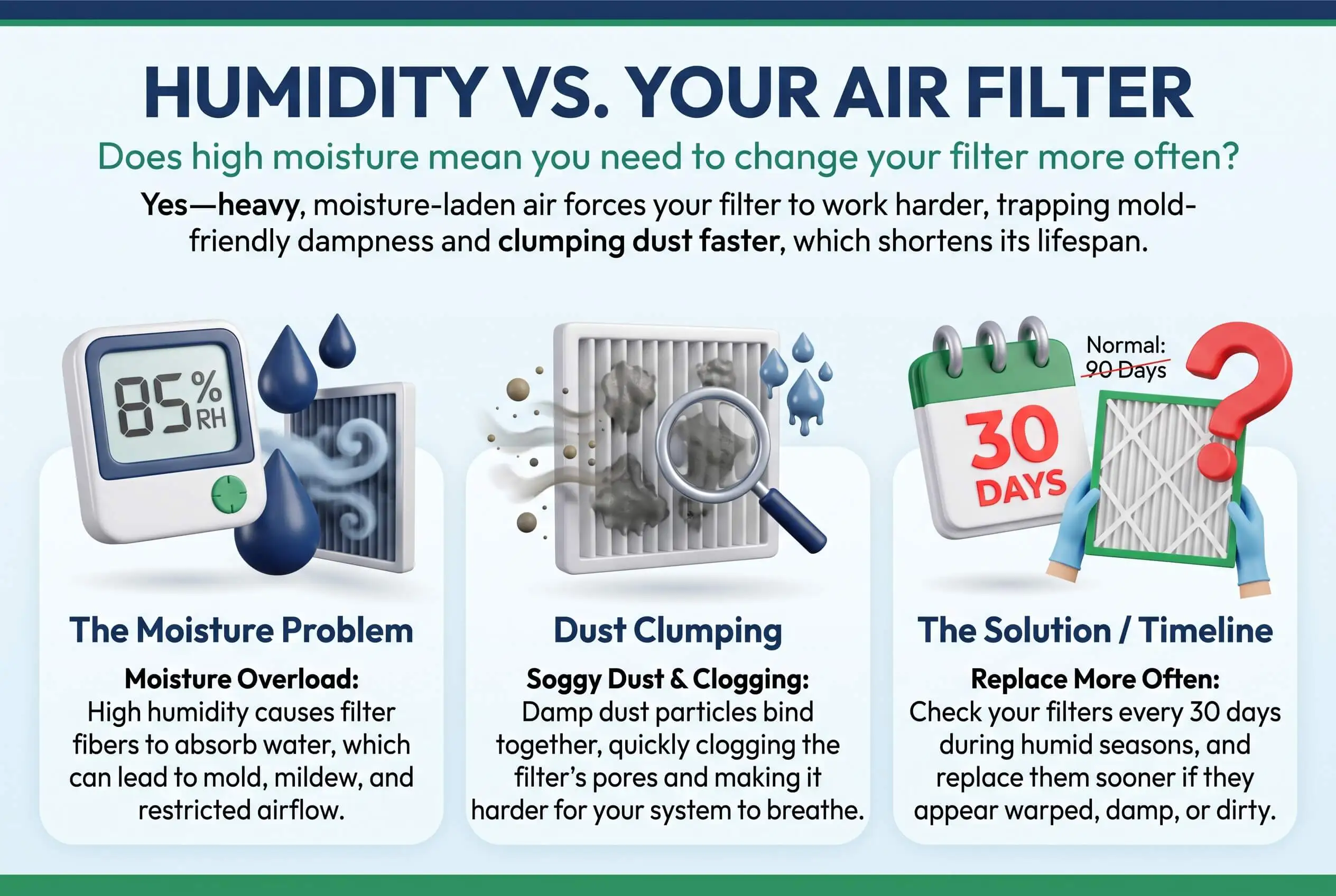
Yes. High humidity can wear out an air filter faster than the calendar says it should. I first noticed it by comparing two filters side by side, one pulled after a muggy August and one after a dry February, and the summer filter looked months older.
Moisture makes pollen, pet dander, and fine dust clump together and cling to the filter, so it loads up sooner. Leave that filter damp long enough and it turns into a spot where mold can settle, right in the path of the air your family breathes. The good news is that a quick monthly look at your air filter for home use shows you most of this before it becomes a problem.
TL;DR Quick Answers
air filter
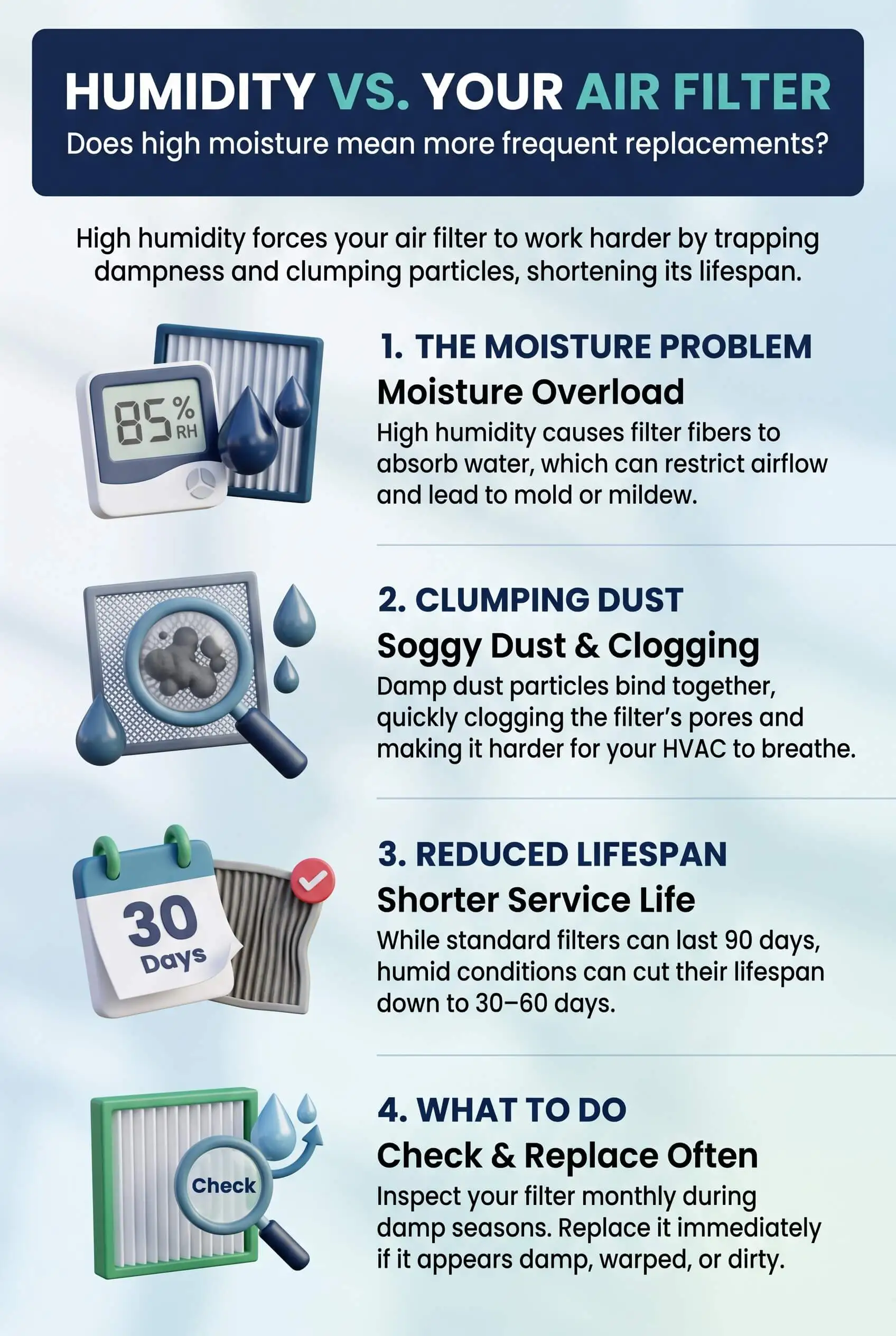
An air filter is the pleated barrier in your HVAC system that traps dust, pollen, pet dander, and mold spores before they circulate through your home. In humid weather, moisture makes those particles stick and pile up faster, so a filter that lasts two months in dry air may need replacing sooner.
What it does: Catches airborne particles and keeps them from building up on your blower and evaporator coil.
How often to replace it: Every one to two months during cooling season, per the U.S. Department of Energy, and sooner in humid, dusty, or pet-heavy homes.
What to check monthly: Gray buildup, dark spots, a musty smell, or a sagging frame.
Why fit matters: A snug filter with no gaps around the frame keeps humid, unfiltered air from slipping past.
Humidity target: Holding indoor humidity between 30 and 50 percent helps your filter last longer.
Top Takeaways
Humid air makes particles sticky, so filters load up and lose airflow faster.
A damp, dirty filter can give mold a foothold inside your HVAC system.
In humid months, check your filter monthly and replace it based on how it looks and smells, not the calendar alone.
Keep indoor humidity between 30 and 50 percent with your air conditioner or a dehumidifier.
A filter that keeps getting wet usually traces back to a drain, drip pan, or duct problem.
How Humidity Changes the Way an Air Filter Works
Relative humidity measures how much water vapor the air holds compared with the most it could hold at that temperature. As that number climbs, airborne particles soak up moisture and turn heavier and stickier. They stop spreading evenly across the pleated filter media and start piling up on the surface, plugging the gaps air needs to get through.
Packed media raises static pressure, the resistance your blower has to push against. Your system runs longer to move the same amount of air, so comfort slips while your energy bill creeps up. And because mold spores float around in nearly every home, damp media hands them something to hold on to. Trapped dirt plus moisture is all mold needs.
Humidity also feeds the allergens your air conditioner filter is trying to catch. Dust mites and mold both thrive in damp homes, so a humid house sends more of them toward the filter every single day.
Signs Humidity Is Wearing Out Your Filter Faster
Slide the filter out and give it a good look. Any of these clues means moisture is probably part of the story.
A musty smell at the vents. It's often the first hint of dampness or growth inside the filter cabinet.
Dark spots or patchy color. Gray dust is normal wear, but black or green specks point to moisture.
A warped or sagging frame. Cardboard frames soften after weeks of damp air.
Weaker airflow. Rooms take longer to cool, and the system runs longer cycles to get there.
Water near the air handler. Condensation around the filter slot or return grille means a moisture source sits close by.
How Often to Replace an Air Filter in a Humid Climate
The U.S. Department of Energy recommends cleaning or replacing air conditioner filters every month or two during cooling season, and sooner if your system runs constantly, the house gets dusty, or you have pets. In a humid home, I treat two months as the longest a filter should ever stay in.
From late spring through early fall, I check mine once a month. I swap it the moment it looks loaded, smells musty, or shows any spotting, whichever comes first.
Timing only gets you halfway. The right air filter for your system has to fit snugly, with no gaps around the frame, so humid, unfiltered air can't sneak past and coat the evaporator coil. For a starting interval that fits your household, this site's guide to how often to change HVAC filters breaks it down by pets, allergies, and how hard your system works.
Filter Thickness and MERV Rating in Humid Homes
A 4- or 5-inch filter packs in far more media than a 1-inch panel, so it holds more before airflow drops. Higher MERV ratings catch finer particles, and in sticky air that also means they can fill up faster. Before you move up a rating, check whether your HVAC can handle a MERV 11 filter.
When a Damp Filter Points to a Bigger HVAC Problem
A filter that keeps getting wet is telling you something about the system around it. These are the usual culprits.
A clogged condensate drain line. Water backs up into the drip pan and filter cabinet.
A dirty or rusted drip pan. Standing water evaporates right back into your airflow.
An oversized air conditioner. It cools the house so quickly that it never runs long enough to pull moisture out.
Leaky return ducts. Gaps can draw humid attic or crawlspace air straight to the filter.
Suspect mold inside the system? The EPA advises against running it until someone checks it, since the blower can push spores through the whole house. This site's guide to professional air duct mold remediation walks through what that process looks like.
Simple Ways to Protect Your Filter From Moisture
Measure first. An inexpensive hygrometer tells you what your indoor humidity actually is.
Aim for 30 to 50 percent. That range keeps mold and dust mites in check without drying out the air.
Dehumidify when you need to. Your air conditioner's dry mode or a standalone dehumidifier will both do the job.
Keep the drain line clear. Few things soak a filter faster than a blocked line.
Store spares somewhere dry. A hall closet beats a damp garage or basement floor every time.
If your readings stay high after all that, indoor air quality testing can help you track down where the moisture is coming from.
"In my experience, when a filter comes out of a humid house spotted and soft, the filter usually isn't what failed. Most of the time a slow condensate drain is keeping the cabinet damp, and clearing that line does more for filter life than any upgrade."
Essential Resources
1. ENERGY STAR Maintenance Checklist
A plain-language seasonal checklist. It recommends inspecting, cleaning, or changing your filter every month and explains how a dirty one drives up energy costs and wears down equipment.
Source: https://www.energystar.gov/saveathome/heating-cooling/maintenance-checklist
2. American Lung Association: Mold and Dampness
Shows how dampness and mold affect breathing, where indoor moisture usually comes from, and why holding humidity under 50 percent helps.
Source: https://www.lung.org/clean-air/indoor-air/indoor-air-pollutants/mold-and-dampness
3. HUD Healthy Homes: Mold
Practical moisture-control steps for homeowners, from running a dehumidifier to spotting the hidden moisture behind walls and under carpet.
Source: https://www.hud.gov/program_offices/healthy_homes/healthyhomes/mold
4. National Weather Service: Dew Point vs. Humidity
Explains why dew point often tells you more than relative humidity about how muggy the air in your home will feel.
Source: https://www.weather.gov/arx/why_dewpoint_vs_humidity
5. MedlinePlus: Molds
The National Library of Medicine's overview of how mold takes hold in damp spaces and the health effects it can trigger.
Source: https://medlineplus.gov/molds.html
6. NIEHS: Mold
Research-based background on indoor mold exposure from the National Institute of Environmental Health Sciences.
Source: https://www.niehs.nih.gov/health/topics/agents/mold
7. OSHA: Indoor Air Quality
Covers how ventilation, temperature, and humidity that runs too high or too low shape the air inside a building.
Source: https://www.osha.gov/indoor-air-quality
Supporting Statistics
1. The Humidity Range That Limits Mold
The EPA recommends keeping indoor relative humidity below 60 percent, ideally between 30 and 50 percent.
Holding your home in that range keeps both the filter and the cabinet around it drier through the muggy months.
Source: https://www.epa.gov/mold/brief-guide-mold-moisture-and-your-home
2. A Clean Filter Cuts Cooling Energy
The Department of Energy reports that replacing a dirty, clogged filter can lower an air conditioner's energy use by 5 to 15 percent.
Humidity loads filters faster, so you can lose those savings sooner than you'd expect.
Source: https://www.energy.gov/energysaver/maintaining-your-air-conditioner
3. Damp Homes and Breathing
The CDC points to a 2004 Institute of Medicine finding of sufficient evidence linking indoor mold exposure to respiratory and asthma symptoms in sensitive people.
A filter that stays damp is one more surface where that mold can get its start.
Source: https://www.cdc.gov/mold-health/about/index.html
Using high quality filters and maintaining indoor humidity between 30 and 50 percent can help limit mold and allergens, improve indoor air quality, and support efficient cooling, while replacing dirty filters can reduce air conditioner energy use by 5 to 15 percent.
Final Thoughts and Opinion
Humidity does more than make a house feel sticky. It changes how fast your filter fills up and whether that filter stays a clean barrier or becomes a damp, dirty surface sitting in the middle of your airflow. During humid months, I trust what the filter looks and smells like far more than any date on the calendar.
Here's my honest take. Your filter works as an early warning system for HVAC maintenance. When it wears out fast or comes out damp, replace it, then follow the moisture back to where it starts, whether that's the drain line, the drip pan, a leaky return duct, or indoor humidity that won't come down. Fix the moisture and your filter goes back to protecting the air your family breathes, with very little effort for a big payoff.
Frequently Asked Questions
Can a wet air filter grow mold?
Yes. Mold needs moisture and something to feed on, and a damp filter full of dust gives it both. Replace a wet or spotted filter right away and then find where the water is coming from.
Should I change my air filter more often in summer?
In humid regions, usually yes. Your system runs more and moisture helps particles stick, so a monthly check from late spring through early fall makes sense.
Does a dehumidifier help my air filter last longer?
It can. Drier air keeps particles lighter and the media dry, so the filter holds steady airflow for longer.
Why does my air filter smell musty?
A musty smell usually means moisture is reaching the filter or its cabinet. Check the condensate drain, the drip pan, and the nearby ducts, and put in a fresh filter.
Is a higher MERV filter a good idea in a humid house?
It can be, as long as your system is built for it. Higher MERV filters catch more, but they may load faster in humid air, so check them more often.
Keep Humidity From Cutting Your Filter Short
Pull your filter this month, check it against the moisture clues above, and swap it as soon as it shows wear. Choosing the right air filter ratings and pairing that choice with steady indoor humidity can help maintain effective filtration and keep your home's air protected through the muggiest stretch of summer.